Why Social Unrest Has Become a Standing Condition in Europe and the United States
A summer afternoon in a French city centre, seven years ago. A man in a red shirt talks with his hands, mid-argument, while the crowd behind him drifts across the square. Fifty metres away, a riot squad in black moves up behind a shield wall, and a handful of demonstrators push a homemade barricade of tarpaulin and umbrellas across the tram tracks. Off to one side, students carry a red banner in Italian about Sicily and war, which has nothing to do with the local grievance and everything to do with the fact that these crowds have started to share a circuit.
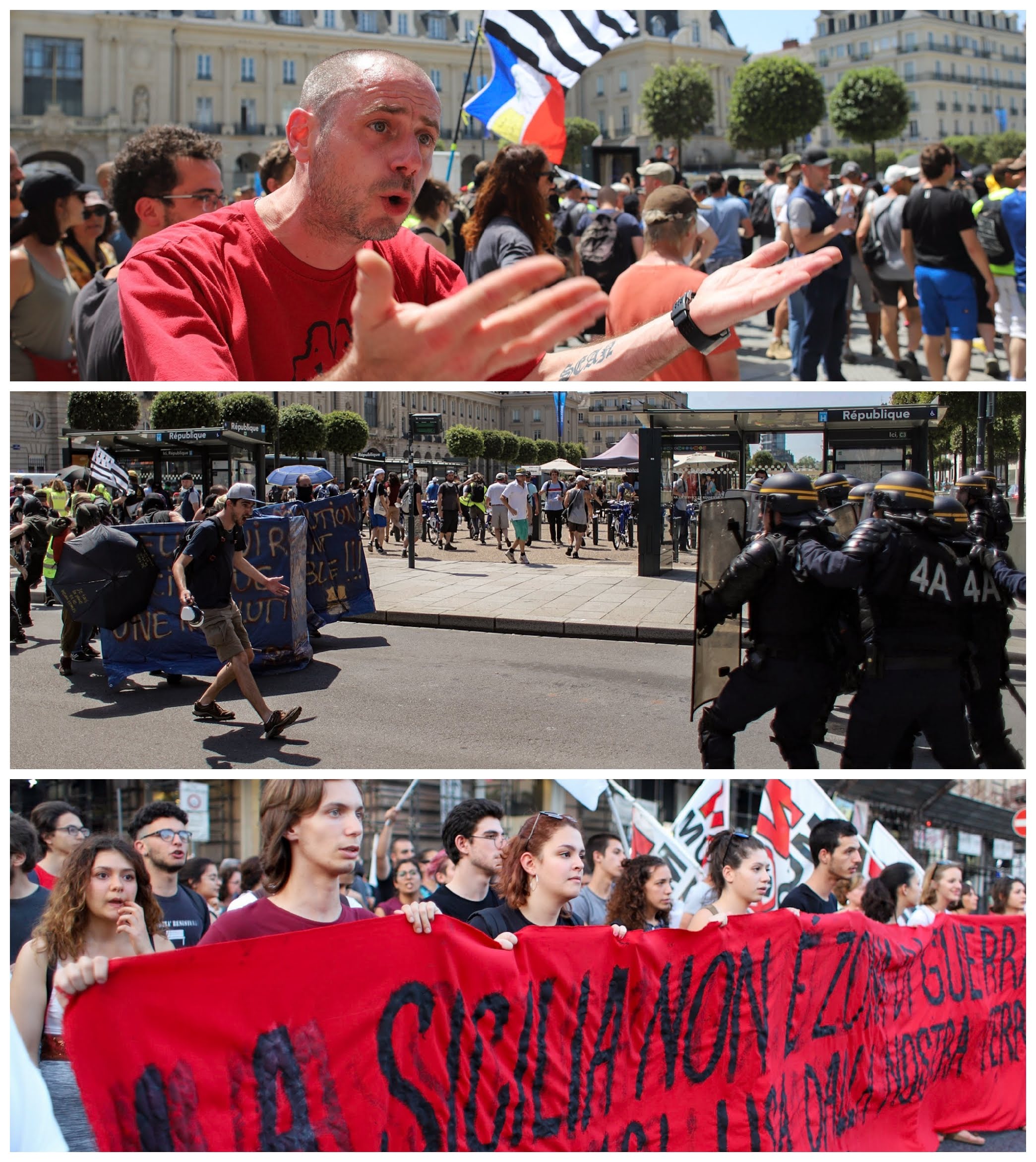
At the time this read as a bad season. Looking back, it reads as a baseline.
The measured picture has moved in one direction for a while now. The Global Peace Index recorded its twelfth consecutive annual deterioration in 2026, and political instability and violent demonstrations are doing a growing share of the damage in countries that used to score well on both. Verisk Maplecroft’s civil unrest work makes the same point from the commercial side: protest activity has risen over the past two years, and the forecast for 2026 was for more disruption than 2025, with Europe holding half of the ten highest-risk countries and the United States sitting third. The American entry is worth pausing on, because the sharpest single-country increase in protest size over the previous twelve months happened there, in a country that spent decades exporting stability analysis to everyone else.
Scale is the thing that changed, more than violence. Roughly nine in ten protests stay peaceful. Around one in ten involve violence of some kind, and well under one in a hundred end in serious property damage. Those ratios have held reasonably steady. What has not held steady is how many people turn out, how often, and how quickly a local dispute picks up a national audience.
The money ran out before the anger did
For thirty years the standard European response to street pressure was to buy it off. A pension reform gets softened, a fuel tax gets suspended, a wage envelope gets found. That reflex assumed fiscal room, and the room has closed. Debt service is expensive again, populations are older, and defence budgets are climbing for reasons nobody in a finance ministry can argue with. When France proposed public spending cuts last autumn, something like 195,000 people were on the streets at the start of October, and the government’s menu of concessions was thinner than it would have been a decade earlier.
That is the structural part. Grievance is normal in a democracy; what makes it dangerous is a state that can no longer pay to make it go away, facing a public that remembers when it could.
Migration turned the crowd into two crowds
The other shift is that street politics stopped being a mostly left-wing activity in Europe. Demonstrations of more than 100,000 people with tighter immigration controls as the central demand have now happened in both the United Kingdom and Germany. Most stayed peaceful. Comparable protests in Spain and the Netherlands did not.
This matters operationally, not just politically. A single mobilised bloc is a public order problem. Two mobilised blocs with opposing demands, sharing the same city squares on the same weekends, is a different problem, and one that police forces built around a rough consensus on who the protesters are tend to handle badly.
Nobody to sign the deal with
The third change is organisational. Mobilisation has become cheap, fast, and largely leaderless. That produces impressive turnout from a standing start, and it removes the counterparty. A union federation can call off a strike. A hashtag cannot call off a Saturday. Governments negotiating with movements that have no mandate structure end up either conceding to nobody in particular or waiting the thing out, and waiting it out has its own costs.
For anyone with physical assets, the practical conclusion has already been drawn by the insurance market, which treats strikes, riots and civil commotion as a line item that is getting harder to price as episodic. Allianz Commercial has documented tens of thousands of protest-linked incidents. Commercial property is targeted more often than it used to be, and the bill runs into hundreds of millions in damage and business interruption.
Planning for unrest as a shock event made sense when it arrived every few years. It arrives most quarters now, in wealthy countries with functioning courts and competent police, which is precisely why the old planning assumption keeps failing.
The man in the red shirt was not an early warning. He was just early.